Introduction
Here’s a detailing truth most car enthusiasts learn the hard way: your waxing method matters just as much as the wax itself. You can buy the most expensive carnauba wax on the market, but if you apply it incorrectly—whether by hand or machine—you’ll end up with streaks, swirl marks, and disappointing results.
Car waxing serves three critical purposes: protecting your paint from UV damage and environmental contaminants, creating that eye-catching showroom shine, and extending the longevity of your vehicle’s clear coat. But the age-old debate continues to divide detailing enthusiasts: should you wax your car by hand or use a machine?
In this comprehensive guide, we’ll break down the real-world differences between hand waxing and machine waxing. You’ll learn which method produces better results, which is more cost-effective, and—most importantly—which approach is right for your specific situation, skill level, and vehicle type.
What Is Car Waxing?
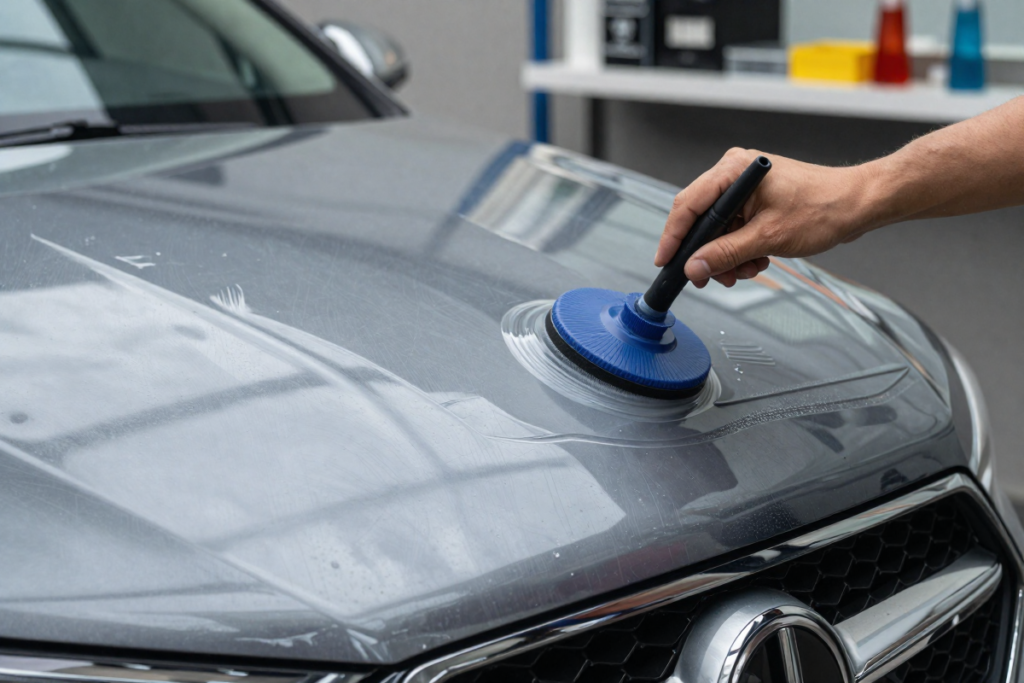
Before diving into the hand versus machine debate, let’s establish what car waxing actually does and why it’s an essential part of automotive care.
Car waxing is the process of applying a protective layer over your vehicle’s paint or clear coat. This barrier shields your car from UV rays, road salt, bird droppings, tree sap, and other environmental hazards that cause oxidation and paint deterioration.
Types of Car Wax
Not all waxes are created equal. Understanding the three main categories helps you choose the right product for your application method:
Carnauba Wax: Derived from Brazilian palm trees, carnauba wax delivers the deepest, warmest glow—especially on dark-colored vehicles. It’s prized for its natural formulation and stunning wet-look finish, though it typically lasts 4-8 weeks.
Synthetic Sealants: These polymer-based products bond chemically with your paint, offering superior durability (3-6 months) and excellent water beading. They’re ideal for those who want long-term paint protection without frequent reapplication.
Hybrid Waxes: Combining natural carnauba with synthetic polymers, hybrid waxes aim to deliver both exceptional shine and extended durability, making them popular among detailing enthusiasts who want the best of both worlds.
Benefits of Waxing Your Car
- UV Protection: Prevents sun damage that causes paint fading and oxidation
- Water Beading: Creates hydrophobic properties that repel water and contaminants
- Enhanced Gloss: Amplifies paint depth and clarity for that showroom finish
- Easier Cleaning: Waxed surfaces resist dirt adhesion, making future washes simpler
Where Waxing Fits in the Detailing Process
Waxing is the final protective step in proper car detailing. The complete workflow looks like this:
- Wash and dry
- Decontaminate (clay bar treatment)
- Polish (if needed for paint correction)
- Wax or seal
- Maintain
Skipping preparation steps—especially washing and decontamination—leads to poor wax adhesion and potentially scratches your paint.
What Is Hand Waxing?
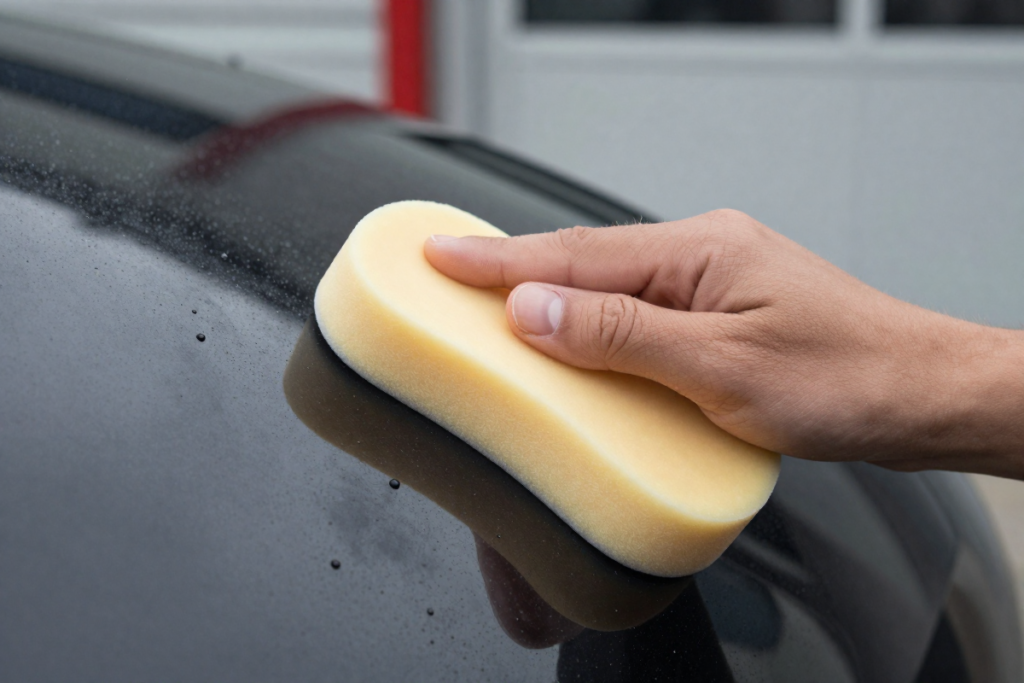
Hand waxing is the traditional, manual method of applying car wax using foam or microfiber applicator pads and buffing with microfiber towels.
How Hand Waxing Works
The process is straightforward:
- Apply a small amount of wax to a foam applicator pad
- Spread the wax over a 2×2 foot section using circular or straight overlapping motions
- Allow the wax to cure (typically 1-5 minutes, or until it hazes)
- Buff off the residue with a clean microfiber towel using light pressure
Pros of Hand Waxing
Greater Control in Tight Areas: Hand application excels in complex areas like around emblems, trim pieces, door handles, and body lines where machines can’t easily reach.
Lower Risk of Paint Damage: With no moving parts or motors, hand waxing virtually eliminates the risk of heat buildup, over-polishing, or creating swirl marks—assuming you use proper technique.
No Special Equipment Required: You only need basic supplies: wax, applicator pads, and microfiber towels. Total startup cost: under $30.
Ideal for Beginners: The learning curve is minimal. If you can wash your car, you can hand wax it.
Cons of Hand Waxing
Time-Consuming: Expect to spend 2-4 hours on a mid-size sedan, depending on your thoroughness and the wax’s cure time.
Physically Demanding: Repeatedly buffing wax by hand requires significant arm strength and stamina, especially on larger vehicles like SUVs or trucks.
Potential for Uneven Application: Without the consistent motion of a machine, it’s easy to apply wax too thick in some areas or miss spots entirely, leading to streaking.
Best Situations for Hand Waxing
Hand waxing shines in these scenarios:
- Small vehicles or spot treatments (coupes, sedans)
- Classic cars or vehicles with delicate single-stage paint
- Beginners learning detailing basics without investment in equipment
- Detail work around complex body lines and trim
Recommended Tools for Hand Waxing
[Premium Foam Applicator Pads]
Soft, non-abrasive pads prevent scratching while evenly distributing wax.
[High-Quality Microfiber Towels (Pack)]
Look for at least 400 GSM (grams per square meter) for maximum absorbency and scratch-free buffing.
[Premium Carnauba Paste Wax]
A high-quality carnauba wax designed specifically for hand application delivers superior results.
What Is Machine Waxing?
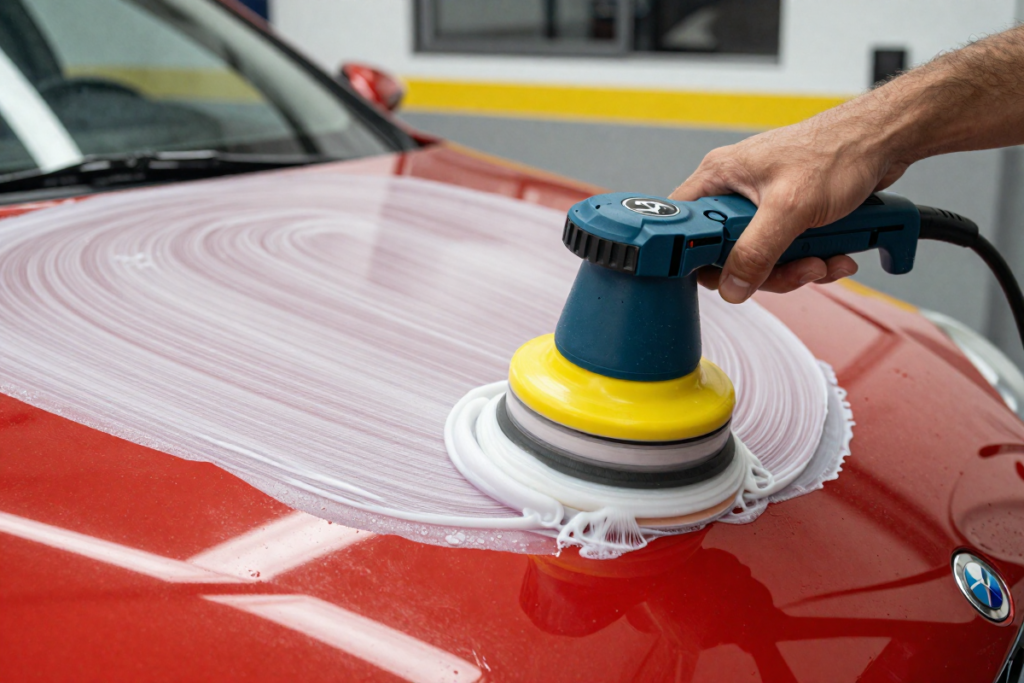
Machine waxing uses dual-action polishers or rotary buffers to apply and distribute wax evenly across your vehicle’s surface.
How Machine Waxing Works
Instead of manual elbow grease, a polishing machine does the work:
- Apply wax directly to a foam finishing pad attached to the polisher
- Spread the product across a section at low speed
- Work the wax into the paint using overlapping passes at medium speed
- Wipe away residue with a microfiber towel
The machine’s oscillating or rotating motion ensures even distribution and consistent pressure.
Types of Machines
Dual-Action (DA) Polishers: Also called random orbital polishers, DA machines oscillate and rotate simultaneously. They’re beginner-friendly, produce minimal heat, and are extremely safe on clear coat finishes. Recommended for most car owners.
Rotary Buffers: Professional-grade tools that spin in one direction at high speeds. They’re powerful and efficient but require experience to avoid burning through paint or creating holograms. Best left to professionals or advanced users.
Pros of Machine Waxing
Faster Application: Machine waxing cuts application time by 50-70%. What takes 3 hours by hand might only take 45-90 minutes with a DA polisher.
More Uniform Coverage: Consistent machine motion eliminates streaking and ensures even product distribution across the entire panel.
Better for Large Surfaces: Hoods, roofs, and truck beds are covered quickly and efficiently without the physical fatigue of hand buffing.
Less Physical Effort: The machine does the work—you simply guide it. This makes frequent detailing sustainable long-term.
Cons of Machine Waxing
Higher Upfront Cost: A quality dual-action polisher costs $100-$300, plus pads and accessories. Budget $150-$400 for a complete setup.
Learning Curve: While DA polishers are user-friendly, there’s still technique to learn: proper speed settings, pressure application, and pad selection.
Risk of Paint Damage if Misused: Running a polisher too fast, using excessive pressure, or choosing the wrong pad can create swirl marks or heat damage.
Best Situations for Machine Waxing
Machine waxing is ideal for:
- Large vehicles (SUVs, trucks, vans)
- Frequent detailers who wax monthly or quarterly
- Enthusiasts seeking professional-level results at home
- Those who value time efficiency
Recommended Tools for Machine Waxing
[Dual-Action Polisher Kit]
Look for variable speed control (typically 2000-6000 OPM) and a 5-6 inch backing plate.
[Foam Finishing Pads Set]
Soft finishing pads (not cutting or polishing pads) are essential for waxing without marring.
[Machine-Friendly Liquid Wax]
Liquid or spray waxes distribute more evenly than paste when using a machine.
Hand Waxing vs Machine Waxing: Side-by-Side Comparison
| Feature | Hand Waxing | Machine Waxing |
|---|---|---|
| Ease of Use | Beginner-friendly, minimal setup | Moderate learning curve, requires practice |
| Time Required | 2-4 hours (mid-size car) | 45-90 minutes (mid-size car) |
| Cost | $20-$50 (startup) | $150-$400 (complete setup) |
| Finish Quality | Good with proper technique | Excellent, more consistent coverage |
| Risk Level | Very low (nearly damage-proof) | Moderate if misused (safe with DA) |
| Physical Effort | High (arm fatigue common) | Low (machine does the work) |
| Best For | Small cars, tight areas, beginners | Large vehicles, frequent use, efficiency |
Quick Summary Takeaway
- Winner for Beginners: Hand waxing
- Winner for Speed: Machine waxing
- Winner for Cost: Hand waxing
- Winner for Consistency: Machine waxing
- Winner for Safety: Hand waxing (tie with DA polisher)
- Winner for Large Vehicles: Machine waxing
Which Method Produces Better Results?
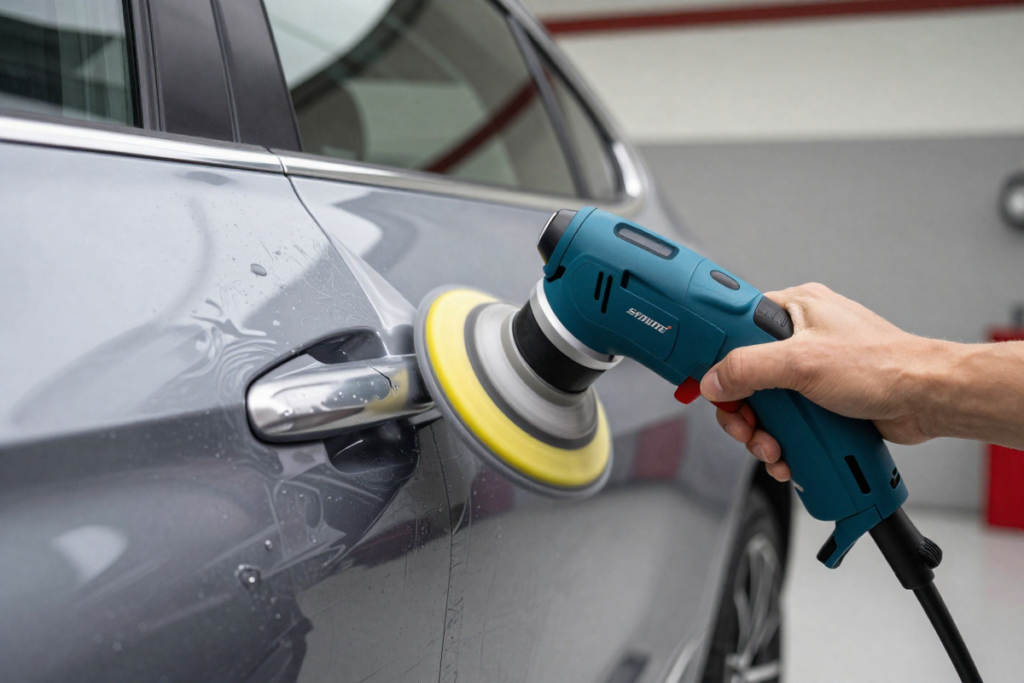
Let’s address the elephant in the room: is machine waxing better than hand waxing in terms of final appearance?
Shine and Gloss Comparison
Both methods can achieve stunning results when executed properly. The quality of the wax matters more than the application method for pure shine. That said, machine application tends to produce slightly deeper gloss due to:
- More uniform wax distribution
- Better product penetration into paint pores
- Consistent buffing pressure across the entire surface
Real-world difference: In side-by-side comparisons, most people can’t distinguish between properly hand-waxed and machine-waxed panels unless they’re detailing professionals.
Durability of Protection
Wax longevity depends primarily on the product formula (carnauba vs synthetic), not the application method. However, machine waxing may offer marginally better durability because:
- The polisher works the wax deeper into microscopic paint imperfections
- More consistent coverage eliminates thin spots that wear faster
Typical durability: 4-8 weeks for carnauba (both methods), 3-6 months for synthetic sealants (both methods).
Consistency of Application
This is where machine waxing clearly wins. The oscillating motion of a DA polisher ensures:
- No streaking or uneven haze
- Consistent product thickness across all panels
- Fewer missed spots or over-applied areas
Hand waxing requires meticulous attention to achieve the same uniformity—doable, but demanding.
Real-World Expectations vs Marketing Claims
Some manufacturers claim machine application “activates” their wax or produces superior bonding. This is mostly marketing. The truth:
- Quality matters more than method
- Proper paint prep (washing, claying) has more impact than application technique
- Both methods produce excellent results in experienced hands
Cost Breakdown: Hand vs Machine Waxing
Initial Investment
Hand Waxing Costs:
- Quality paste wax: $15-$35
- Foam applicator pads (4-pack): $8-$15
- Microfiber towels (6-pack): $15-$25
- Total: $38-$75
Machine Waxing Setup Costs:
- Dual-action polisher: $100-$300
- Foam finishing pads (set of 4): $25-$50
- Liquid wax suitable for machine use: $20-$40
- Microfiber towels: $15-$25
- Total: $160-$415
Long-Term Value
While machine waxing has higher upfront costs, consider the time savings:
- If you wax 4 times per year, machine waxing saves approximately 8-12 hours annually
- Over a 5-year period, that’s 40-60 hours saved
- If your time is worth $20/hour, that’s $800-$1,200 in value
Cost per detail over time (assuming quarterly waxing):
- Hand waxing: ~$10 per session (consumables)
- Machine waxing: ~$15 per session initially (amortizing equipment), dropping to ~$10 after year 2
Budget Recommendations
Best Option Under $50: Hand waxing with quality paste wax
[Car Wax & Applicator Set]
Best Option for Serious Hobbyists: Entry-level DA polisher bundle
[DA Polisher Starter Kit]
Time and Effort Comparison
Average Time for Each Method
Hand Waxing:
- Compact car: 1.5-2.5 hours
- Mid-size sedan: 2-3.5 hours
- Large SUV/truck: 3-5 hours
Machine Waxing:
- Compact car: 30-45 minutes
- Mid-size sedan: 45-90 minutes
- Large SUV/truck: 90-120 minutes
Time variations depend on wax cure time, panel complexity, and your experience level.
Effort Required (Fatigue Factor)
Hand Waxing: Expect arm, shoulder, and upper back fatigue, especially during buffing. Large vehicles can be genuinely exhausting.
Machine Waxing: The polisher does the work—you simply guide it. Minimal physical strain, though holding the machine overhead (roof panels) can tire your arms.
Efficiency Tips for Both Approaches
For Hand Waxing:
- Work in 2×2 foot sections
- Use thin coats (less is more)
- Wax in the shade to prevent premature curing
- Switch hands periodically to prevent fatigue
For Machine Waxing:
- Keep the pad primed with product (3-4 small dots per section)
- Use speed setting 3-4 for waxing (lower than polishing)
- Overlap passes by 50%
- Wipe panels immediately after machine work
Common Mistakes to Avoid
Hand Waxing Mistakes
Applying Too Much Wax: The old adage is true—less is more. Thick wax layers are harder to buff and don’t provide extra protection. Use a thin, even coat.
Not Working in Small Sections: Attempting to wax entire panels at once leads to dried, difficult-to-remove residue. Stick to 2×2 foot areas.
Poor Buffing Technique: Using dirty towels, excessive pressure, or circular motions can create swirl marks. Use clean microfiber towels, light pressure, and straight-line motions.
Machine Waxing Mistakes
Using the Wrong Pad: Cutting or polishing pads are too abrasive for waxing. Always use soft finishing pads (typically black, white, or blue depending on brand).
Applying Too Much Pressure: Let the machine do the work. Excessive pressure slows the oscillation, creates heat, and can damage paint.
Running the Machine Too Fast: Waxing should be done at lower speeds (setting 3-4 out of 6) compared to polishing. High speeds fling product off the pad.
Skipping Paint Prep: Waxing over contaminated paint locks in dirt, brake dust, and iron particles. Always wash and clay bar first.
Pro Tips for Better Waxing Results
Regardless of your chosen method, these professional techniques elevate your results:
Always Wash and Decontaminate First
Waxing over dirty or contaminated paint is the #1 mistake. Follow this sequence:
- Thorough wash with pH-neutral car shampoo
- Clay bar treatment to remove embedded contaminants
- Dry completely
- Wax
Use the “Thin Coat” Rule
A single thin layer of wax provides the same protection as thick coats—with easier application and removal. Think “barely there.”
Work in the Shade
Direct sunlight causes wax to cure too quickly, making it difficult to buff and increasing the risk of streaking. Work in a garage or shaded area.
Use High-Quality Microfiber Towels
Not all microfiber is equal. Look for:
- 400+ GSM (thickness)
- Plush weave (not waffle or terry)
- Clean towels (wash separately without fabric softener)
[AFFILIATE LINK PLACEHOLDER: Professional-Grade Microfiber Towel Set]
Layering Wax: Myth vs Reality
Myth: Multiple wax coats provide exponentially better protection.
Reality: Most benefits come from the first coat. A second coat may add 10-20% more durability, but three or more layers offer diminishing returns.
If you want extra protection, wait 12-24 hours between coats.
Hybrid Approach: Best of Both Worlds
Many professional detailers use a combination approach that leverages the strengths of both methods.
Using a Machine for Application, Hand for Finishing
The Process:
- Apply and work the wax with a DA polisher on large, flat panels (hood, roof, doors, trunk)
- Hand apply in tight areas (grilles, emblems, trim, mirrors)
- Final buff by hand for show-car perfection
When Combining Methods Makes Sense
This hybrid approach is ideal when:
- You want efficiency on large panels but precision on details
- You’re preparing for car shows or photos
- You’re working with complex body lines (sports cars, luxury vehicles)
Recommended Workflow
- Wash and decontaminate entire vehicle
- Machine wax all flat, accessible panels
- Hand wax intricate areas
- Final inspection and hand buffing of entire car
- Total time: 60-90 minutes for mid-size sedan
Frequently Asked Questions
Is machine waxing better than hand waxing?
Neither method is inherently “better”—it depends on your priorities. Machine waxing is faster and more consistent, making it better for large vehicles and frequent detailing. Hand waxing offers more control in tight spaces and has zero learning curve, making it better for beginners or classic cars. Both produce excellent results when done properly.
Can beginners use a polisher safely?
Yes, dual-action polishers are safe for beginners. Unlike rotary buffers, DA polishers won’t burn paint even if you make mistakes. Start at low speeds, use finishing pads, and practice on less visible panels first. Avoid rotary buffers until you gain experience.
How often should you wax your car?
Carnauba wax: Every 4-8 weeks
Synthetic sealants: Every 3-6 months
General rule: When water stops beading or paint feels rough, it’s time to rewax.
Climate, garage parking, and wash frequency affect durability.
Does machine waxing remove scratches?
No. Wax fills and hides minor imperfections temporarily but doesn’t remove them. To actually remove scratches, you need polishing (paint correction) with abrasive compounds—a separate process done before waxing.
What’s the safest method for new car paint?
Both hand and machine (DA) waxing are safe for new cars. Modern clear coat finishes are durable. For added caution, hand wax for the first 3-6 months, then transition to a DA polisher as you gain confidence. Avoid rotary buffers on new paint unless you’re experienced.
Final Verdict: Which Method Is Best for You?
After comparing every angle—cost, time, results, and ease of use—here’s your decision framework:
Clear Recommendations Based on User Type
Beginners → Hand Waxing
Start with hand application to learn proper technique without equipment investment. Once you understand waxing fundamentals, consider upgrading to a DA polisher.
Enthusiasts → Machine Waxing
If you detail regularly and own a mid-size or larger vehicle, a dual-action polisher is worth every penny. The time savings and consistent results justify the upfront cost.
Professionals → Machine + Hybrid Approach
Combine machine efficiency on flat panels with hand precision on details. This delivers the fastest, most consistent professional-grade results.
Decision Checklist
Choose Hand Waxing if you:
- ✓ Own a small vehicle (coupe, compact sedan)
- ✓ Wax 1-2 times per year
- ✓ Have a budget under $50
- ✓ Are new to detailing
- ✓ Own a classic car with delicate paint
Choose Machine Waxing if you:
- ✓ Own a large vehicle (SUV, truck, van)
- ✓ Detail quarterly or more often
- ✓ Can invest $150-$300 in equipment
- ✓ Value time efficiency
- ✓ Want professional-grade results
Choose the Hybrid Approach if you:
- ✓ Want the best of both worlds
- ✓ Detail for car shows or photography
- ✓ Have a vehicle with complex body lines
- ✓ Already own a DA polisher
Take Action: Start Waxing Smarter Today
Now that you understand the real differences between hand waxing and machine waxing, it’s time to choose your approach and get started.
Continue Your Detailing Education
Ready to master the complete car care process? Check out these related guides:
- [Car Deep Cleaning Checklist: Everything You Need for a Spotless Finish]
- [Can You Fix Car Paint Chips Yourself? DIY Guide to Touch-Ups]
- [How to Clean Wheels on Car: Get That Showroom-Ready Look]
What’s your preferred method—hand or machine waxing? Let me know in the comments!
Disclaimer: This article contains affiliate links. If you purchase through these links, we may earn a small commission at no additional cost to you. This helps us create more detailed, helpful content for car enthusiasts like you.