There’s something undeniably stunning about a perfectly detailed black car. The deep, mirror-like finish, the way light seems to pour across the paint like liquid glass — it’s automotive perfection. But if you own a black car, you already know the other side of that story: every swirl mark, water spot, and hologram shows up like it’s under a spotlight.
Black paint is the most unforgiving color on the road. What looks invisible on a white or silver car screams on a dark finish. The good news? With the right car wax for black cars and the correct application technique, you can protect that stunning paint and keep it looking showroom-fresh. This guide covers everything — from why black cars show damage so easily, to the best waxes available, to a step-by-step application process that won’t leave a single swirl behind.
Why Black Cars Show Swirls and Holograms So Easily
Before you can fix the problem, you need to understand what you’re actually dealing with.
What Are Swirl Marks?
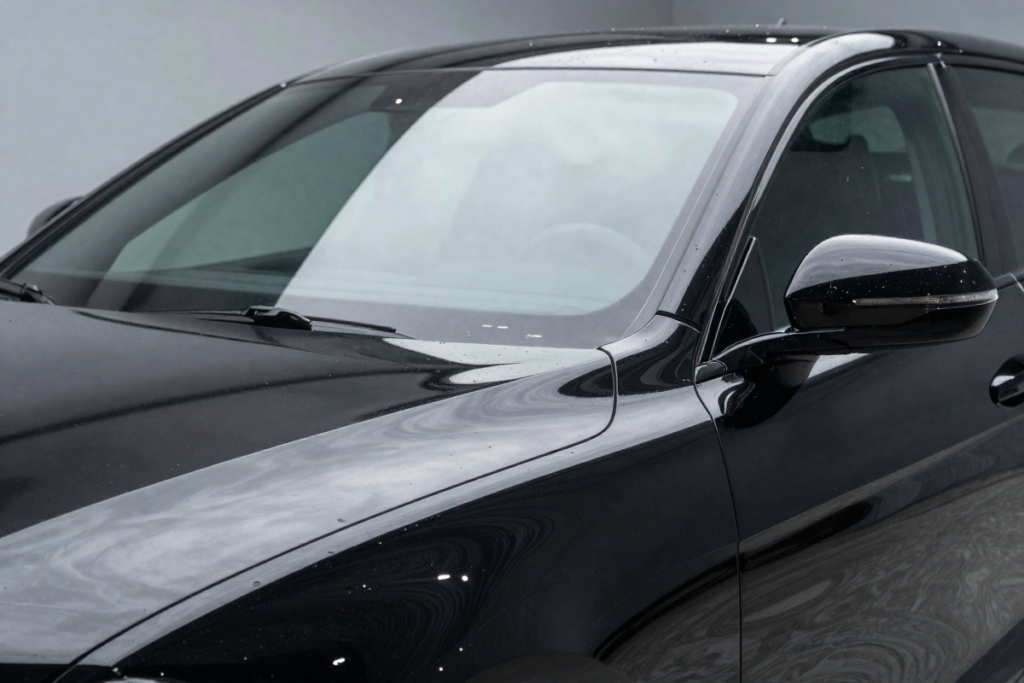
Swirl marks are microscopic scratches in your car’s clear coat — the transparent protective layer that sits on top of your colored base coat. They’re typically caused by friction from dirty wash mitts, rough sponges, improper drying techniques, or the abrasive brushes inside automatic car washes.
Under direct sunlight or artificial lighting, these micro-scratches scatter light in multiple directions, creating that telltale spiderweb or circular pattern across your paint. On a black car, the high contrast between the dark base and reflected light makes every single scratch visible, even ones that would be completely invisible on lighter paint.
What Are Holograms?
Holograms — also called buffer trails or orbital buffer marks — are a different beast entirely. They’re caused by improper machine polishing technique, usually from using a rotary buffer at too high a speed, using the wrong pad, or not keeping the machine moving consistently across the panel. The result is a ghostly, iridescent distortion in the paint that shifts and shimmers as the viewing angle changes.
Common Causes of Both Problems
- Poor washing technique — dragging dirt across the surface instead of lifting it away
- Dirty or reused applicators and towels — a contaminated microfiber is a scratch waiting to happen
- Low-quality or abrasive waxes — some products contain harsh abrasives that damage clear coat over time
- Automatic car washes — the brushes and blowers in drive-through washes are notorious for creating swirl marks on dark paint
- Waxing in direct sunlight — product dries too fast, requiring excessive buffing pressure
What to Look for in a Car Wax for Black Cars

Not all waxes are created equal, and when it comes to black car wax, the formula matters as much as the technique.
Key Features to Prioritize
Non-abrasive formula — This is non-negotiable. Wax is a protectant, not a corrective product. Look for formulas specifically labeled as non-abrasive or “swirl-free.” Abrasive waxes can cause micro-marring on clear coat, especially on dark paint.
High lubricity — A quality wax glides across the surface with minimal friction. Low-lubricity products drag against the paint, and every drag is a potential scratch.
Deep gloss enhancers — Look for waxes that specifically mention gloss depth, wet-look shine, or are formulated for dark and black paint. These contain optical enhancers that make black paint look richer and deeper.
Easy on/off application — Products that are difficult to buff off require more pressure and more passes, both of which increase the risk of introducing swirls.
UV protection — Black paint is particularly vulnerable to UV fading and oxidation. A wax with solid UV-blocking properties helps preserve the depth of your paint over time.
Types of Wax Explained
Carnauba Wax — Derived from the leaves of the Brazilian carnauba palm, this is the gold standard for that warm, deep, natural glow. Carnauba wax produces a wet-look finish that looks incredible on black paint. The trade-off is durability — most carnauba waxes last 4–8 weeks before needing reapplication.
Synthetic Paint Sealants — These polymer-based products bond chemically to your clear coat, offering superior durability (3–6 months or more) and a highly reflective, glass-like shine. The finish tends to be crisper and more clinical than carnauba, but extremely impressive on black paint.
Hybrid Waxes — The best of both worlds. Hybrid formulas combine carnauba’s warm depth with synthetic sealant’s longevity. These are often the top choice for black car owners who want great looks without constant reapplication.
Best Car Waxes for Black Cars — Top Picks
Here are the top-performing waxes for black paint across every budget and use case.
🏆 Best Overall Wax — Meguiar’s Ultimate Liquid Wax
[PRODUCT 1 — Meguiar’s Ultimate Liquid Wax]
Meguiar’s Ultimate Liquid Wax is a hybrid synthetic formula that consistently tops the charts for black cars. It’s non-abrasive, incredibly easy to apply and remove, and delivers a deep, reflective finish with excellent UV protection. The synthetic polymers bond tightly to clear coat, providing impressive durability for a liquid wax.
Pros: Easy application, excellent gloss depth, long-lasting, non-abrasive
Cons: Not quite as warm or “wet” looking as a pure carnauba
Best for: Everyday black car owners who want a reliable, long-lasting product
💰 Best Budget Option — Turtle Wax Hybrid Solutions Ceramic Spray Coating
[PRODUCT 2 — Turtle Wax Hybrid Solutions]
Don’t let the price fool you — Turtle Wax’s Hybrid Solutions line punches well above its weight class. This spray-on formula delivers solid protection, a nice gloss boost, and is remarkably easy to apply. It’s not the deepest or longest-lasting option, but for a regular maintenance wax between details, it’s hard to beat the value.
Pros: Affordable, quick application, good gloss enhancement, no streaking
Cons: Shorter durability than premium options
Best for: Budget-conscious detailers and regular maintenance between full details
💎 Best Premium Wax — P21S Carnauba Wax
[PRODUCT 3 — P21S Carnauba Wax]
If you want the absolute deepest, most jaw-dropping finish on your black car, P21S delivers. This high-grade carnauba wax is beloved by professional detailers and car show enthusiasts for good reason — the warm, liquid depth it imparts to black paint is unmatched. Application is smooth, removal is effortless, and the results speak for themselves.
Pros: Stunning depth and gloss, gentle on clear coat, loved by professionals
Cons: Higher price point, shorter durability (4–6 weeks)
Best for: Car show prep, special occasion detailing, enthusiasts who love carnauba
⚡ Best Spray Wax (Quick Application) — Chemical Guys Black Light Hybrid Radiant Finish
[PRODUCT 4 — Chemical Guys Black Light]
Specifically formulated for dark and black paint, Chemical Guys Black Light is a spray wax designed to enhance depth and gloss while being virtually wipe-on, wipe-off simple. It’s perfect for a quick refresh between full wax sessions and adds noticeable richness to black paint.
Pros: Formulated specifically for black paint, extremely quick to apply, great gloss enhancer
Cons: Lighter protection than paste or liquid wax
Best for: Quick detailing sessions, between-wash refreshes, beginners
🛡️ Best Long-Lasting Sealant — Collinite 845 Insulator Wax
[PRODUCT 5 — Collinite 845 Insulator Wax]
Collinite 845 has a legendary reputation in the detailing community, and it earns every bit of it. This industrial-strength paste wax sealant can last 4–6 months even under harsh conditions. It’s the go-to choice for people who park outdoors, live in hot climates, or simply don’t want to wax every two months.
Pros: Exceptional durability, strong UV protection, outstanding value
Cons: Slightly more effort to buff off, finish is more sealant-bright than carnauba-warm
Best for: Outdoor parking, durability seekers, those who wax infrequently
Quick Comparison Table
| Wax | Type | Durability | Gloss Depth | Ease of Use | Best For |
|---|---|---|---|---|---|
| Meguiar’s Ultimate Liquid | Hybrid | 3–4 months | ★★★★☆ | ★★★★★ | Overall best |
| Turtle Wax Hybrid Solutions | Synthetic Spray | 1–2 months | ★★★☆☆ | ★★★★★ | Budget pick |
| P21S Carnauba | Carnauba | 4–6 weeks | ★★★★★ | ★★★★☆ | Premium finish |
| Chemical Guys Black Light | Hybrid Spray | 4–6 weeks | ★★★★☆ | ★★★★★ | Quick detailing |
| Collinite 845 | Synthetic Sealant | 4–6 months | ★★★★☆ | ★★★☆☆ | Long-lasting protection |
Step-by-Step: How to Apply Wax Without Causing Swirls

This is where most people go wrong. The best car wax for black paint in the world won’t save you if your technique is off. Follow these steps carefully.
Step 1: Proper Washing (This Is Critical)
Before a single drop of wax touches your car, the surface must be completely clean. This is the most important swirl-prevention step of the entire process.
Use the two-bucket wash method:
- Fill one bucket with your car wash soap solution
- Fill a second bucket with clean rinse water
- Dip your wash mitt into the soapy bucket, wash one panel, then rinse the mitt in the clean water bucket before reloading with soap
- This prevents dirt from being transferred back onto the paint
Use a quality microfiber wash mitt — never a sponge. Sponges trap grit against the surface. A microfiber mitt lifts and holds it away from the paint.
Dry with a clean, plush microfiber drying towel — pat dry rather than dragging across the surface when possible. A waffle-weave drying towel is excellent for black cars.
Step 2: Surface Preparation
If your car has any embedded contaminants — industrial fallout, tree sap residue, road tar — a clay bar treatment is essential before waxing. Waxing over contaminants seals them in and creates a rough, uneven surface.
Run a clay bar (with plenty of detailing spray as lubricant) across each panel. The clay will pull embedded particles out of the clear coat. The surface should feel glass-smooth afterward. Follow up with a panel wipe or isopropyl alcohol (IPA) wipedown to remove any clay lubricant residue before applying wax.
Step 3: Wax Application
- Apply wax using a foam applicator pad or microfiber applicator — never bare hands or a rough cloth
- Use a thin, even layer — more is not better. Thick application means more buffing, which means more friction
- Work in straight lines, not circles. Circular motions are how swirl marks happen. Work panel by panel in overlapping straight strokes
- Work in shade or indoors — wax applied in direct sunlight dries too quickly, hazes unevenly, and requires aggressive buffing to remove
Step 4: Buffing Off Safely
- Allow the wax to haze properly before buffing — follow the product’s instructions for timing
- Use a clean, soft microfiber towel rated for buffing (300–400 GSM minimum)
- Flip your towel frequently — once a section of the towel picks up wax residue, move to a fresh section to avoid scratching with buildup
- Apply light pressure only — let the towel do the work, not your arm strength
Pro Tips to Avoid Swirls and Holograms
These are the details that separate good results from great results on black paint:
- Never reuse dirty towels — a contaminated microfiber is effectively sandpaper on clear coat
- Use separate towels for each task — washing, drying, applying wax, and buffing each require dedicated, clean towels
- Avoid cheap sponges at all stages — they trap and drag grit
- Apply wax in cool, shaded conditions — garages, covered areas, or early morning/late evening outdoors
- Don’t over-apply product — a thin coat protects just as well as a thick one and buffs off far more easily
- Consider a dual-action (DA) polisher for wax application if you’re comfortable with one — a DA polisher applies product evenly without the hologram risk of a rotary buffer
[RECOMMENDED TOOL: Dual Action Polisher]
Common Mistakes to Avoid When Waxing Black Cars
- Waxing a dirty surface — always wash first, no exceptions
- Using circular motions — swirl marks are literally caused by this
- Letting wax sit too long — dried, caked wax is a nightmare to remove and requires excessive buffing
- Using old or low-quality towels — worn microfibers lose their softness and scratch
- Skipping paint prep — clay bar treatment before waxing makes a significant difference in the final result
- Over-buffing — buffing more than necessary adds unnecessary friction to your clear coat
How Often Should You Wax a Black Car?
As a general guideline, wax your black car every 2–3 months with a standard carnauba wax. If you’re using a synthetic sealant or hybrid formula, you may be able to stretch to every 4–6 months depending on the product.
Environmental factors that accelerate wax breakdown include:
- Direct sun exposure — UV rays degrade wax faster than almost anything else
- Rain and humidity — water eventually breaks down the wax layer
- Dust and road debris — constant exposure wears the protective coating thin
- Garage vs. outdoor parking — garage-kept vehicles can go significantly longer between wax applications
A quick test: pour water on your car. If it beads up and rolls off easily, your wax protection is still active. If water sheets flat and clings to the surface, it’s time to reapply.
Wax vs. Sealant vs. Ceramic Coating: Which Is Right for You?
| Wax | Paint Sealant | Ceramic Coating | |
|---|---|---|---|
| Durability | 4–8 weeks | 3–6 months | 2–5 years |
| Gloss Type | Warm, deep | Reflective, crisp | Glass-like, extreme |
| Application | Easy (DIY) | Easy (DIY) | Moderate–difficult |
| Cost | Low | Low–Medium | Medium–High |
| Swirl Resistance | Minimal | Minimal | Improved (harder surface) |
| Best For | Enthusiasts, show cars | Everyday drivers | Long-term protection |
Choose wax if you enjoy the detailing process, want the warmest possible finish, and don’t mind reapplying every couple of months.
Choose a sealant if you want reliable, low-maintenance protection without frequent reapplication.
Consider ceramic coating if you want long-term paint protection and are willing to invest in professional application or careful DIY prep. Note that ceramic coating does not prevent swirl marks — it just creates a harder surface that’s somewhat more resistant to light scratching.
Recommended Tools & Accessories for Black Cars

The right products matter, but so does the right toolkit. Here’s what you need:
[Microfiber Towel Set (Buffing Grade)]
Look for 300–400 GSM microfiber cloths specifically labeled for wax removal and buffing.
[Foam Applicator Pads]
Soft, round foam pads for even, gentle wax application without scratching.
[Microfiber Wash Mitt]
A plush, deep-pile mitt that lifts dirt away from the surface rather than dragging it.
[Clay Bar Kit]
Includes clay bar and lubricant spray — essential for pre-wax surface decontamination.
[Microfiber Drying Towel (Waffle Weave)]
A large, ultra-absorbent drying towel that minimizes contact and friction during the drying stage.
[Dual-Action Polisher (Optional)]
For experienced users, a DA polisher applies wax more evenly and reduces hand fatigue significantly.
FAQs: Car Wax for Black Cars
What is the best wax for black cars?
The best overall wax for black cars is Meguiar’s Ultimate Liquid Wax for everyday use, P21S Carnauba Wax for maximum gloss depth, and Collinite 845 for long-lasting durability. For black-specific enhancement, Chemical Guys Black Light is formulated specifically for dark paint.
How do you prevent swirl marks when waxing a black car?
Always wash the car thoroughly before waxing, use the two-bucket method, apply wax with a foam applicator in straight lines (never circles), use only clean microfiber towels for buffing, and apply light pressure. Work in shade to prevent the wax from drying too quickly.
Is carnauba wax better for black paint?
Carnauba wax produces the warmest, deepest gloss and is beloved for black paint aesthetics. However, it requires more frequent reapplication than synthetic sealants. Hybrid waxes that combine carnauba with synthetic polymers are often the best compromise for black car owners.
Can wax remove swirl marks?
Standard wax cannot remove swirl marks — it can temporarily fill and mask minor surface scratches, making them less visible, but it does not correct them. To actually remove swirl marks, you need a polish or compound as part of a paint correction process, followed by wax as a protectant.
Should you polish or wax a black car first?
Always polish first, then wax. Polishing is a corrective step that removes light scratches, haze, and oxidation from the clear coat. Waxing is a protective step that seals and protects the corrected surface. Applying wax before polishing means you’ll just remove it during the polishing step.
Are swirl marks and holograms the same thing?
No — they’re related but different defects. Swirl marks are micro-scratches typically caused by improper washing or wiping. Holograms (also called buffer trails or orbital buffer marks) are caused specifically by improper machine polishing — usually a rotary buffer moving too fast or remaining stationary on the paint.
Does an automatic car wash cause swirl marks on black cars?
Yes, absolutely. Automatic car wash brushes are one of the leading causes of swirl marks on black paint. Even “brushless” or “touchless” washes can introduce marring through dirty equipment or high-pressure water carrying debris. Hand washing with the two-bucket method is always the safer choice for black cars.
Conclusion: Great Results Come Down to Product AND Technique

Owning a black car means playing by a different set of rules — but the reward of a perfectly detailed, swirl-free black finish is absolutely worth the extra attention. The key takeaway here is simple: the best car wax for black cars means nothing without the right technique.
Start with a proper wash, prep your surface correctly, choose a high-quality non-abrasive wax, apply it in thin layers with straight strokes, and buff off carefully with clean microfiber towels every single time.
Whether you choose the deep warmth of a carnauba wax like P21S, the long-lasting performance of Collinite 845, or the easy everyday reliability of Meguiar’s Ultimate Liquid Wax, you’re starting from a great position. Check out the top-rated waxes recommended above, invest in the right tools to protect your finish, and your black car will look exactly the way it deserves to — stunning, deep, and completely swirl-free.
Looking for more black car detailing tips? Check out our guides on [Car Deep Cleaning Checklist: Everything You Need for a Spotless Finish] and [Can You Fix Car Paint Chips Yourself? DIY Guide to Touch-Ups] for even more ways to protect your investment.
Disclaimer: This article contains affiliate links. If you purchase an item through the link I will earn a small commission at no extra cost to you.